

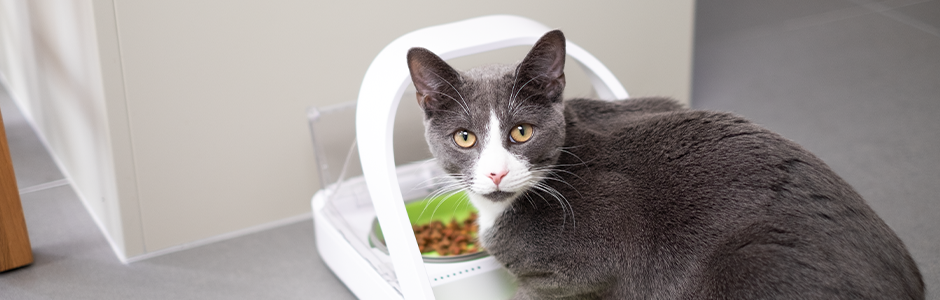


The correct nutrition is essential to your cat’s health. Like all animals, cats need to eat a diet containing the right nutrients (protein, fat, vitamins, and so on) in the right proportions. As cats age or develop certain health conditions, their diet will also need to evolve accordingly.
We’re going to look at cat nutrition in more detail, including how you can make sure your feline family member is getting the right food for them. It’s well recognised that this can be a challenge in a multi-pet household, so we’ll also be discussing ways to limit food stealing, and the value of using selective access feeders.
What are the key nutrients for cats?
These key nutrients are important for all cats –
Protein
Cats are obligate carnivores, which means they need a diet high in animal-based protein to provide them with all the essential amino acids they need. Cats can’t get the right amino acids – especially taurine and methionine – from plant sources, or make them from other amino acids like dogs and people can. Protein is needed for growth and repair, forming the building blocks of many structures in the body, including muscles, skin, and components of the immune system. Cats also use protein as their primary energy source, unlike dogs or people.
Fats
Fat acts as an energy source, but it is also crucial for many other processes, including vitamin absorption. Fat also adds flavour to food, making a diet more palatable. A diet rich in essential fatty acids like omega-3 and omega-6 will promote skin and coat health, as well as reduce inflammation. This can be useful in cats that have conditions like joint disease, although weight control and medications are also important in these cats.
Carbohydrates
While cats primarily use protein as their energy source, they can still benefit from some carbohydrates in their diet. Carbohydrates are broken down in the body to glucose, which can help top up energy reserves. Fibre, a type of carbohydrate, aids healthy digestion and feelings of fullness, which is useful for weight control.
Vitamins
Vitamins A, D, E, and K, plus B vitamins, are essential for your cat’s health. These perform a variety of roles in the body, including immune system function, blood clotting, energy metabolism, and eye health. The right balance is crucial, though, as over-supplementing can cause toxicity.
Minerals
Cats require minerals like calcium and phosphorus for bone health, iron for red blood cell function, potassium for fluid balance and nerve function, magnesium for immune system health, and zinc for wound healing. Good quality commercial diets are carefully formulated to get the right balance.
Water
Water is technically classified as a nutrient, too - it is essential for life. Cats will get water from their diet as well as by drinking it. Clean, fresh water should always be available for your pet.
How does diet change as my cat gets older?
While all cats need the nutrients we listed in the section above, the exact proportions change as your pet ages. So, this means a diet designed for kittens may not be appropriate for a mature cat and vice versa.
To give your pet optimum nutrition, you should feed them a diet designed specifically for their life stage. These life stages are usually divided into 4 main categories -
Kitten
Kitten diets are high-protein to support this rapid period of growth. They should be rich in fatty acids such as DHA, which will help with brain and eye development. A careful balance of calcium and phosphorus is also required to support healthy bones and teeth.
Adult
Adult cats require fewer calories per kilogram of bodyweight than a kitten does, so it is important to move away from kitten food by the time your cat is a year old. Neutering can decrease your cat’s calorie requirements further, so accurately measuring your cat’s food out and ensuring they get the right amount is essential. Lower maintenance levels of protein are found in adult cat foods.
Mature
Cats are considered mature at around 7 to 10 years of age. At this point, their activity levels may decrease, and weight gain can become a concern. Mature cat diets tend to be lower in calories and higher in fibre, which can help with managing your pet’s waistline. Certain health complaints may begin to creep in at this age, which may require dietary management – more on this later.
Senior
From 11 years of age onwards, your cat is classed as senior. Elderly cats need diets that are highly digestible and contain high quality protein to help them maintain their muscle mass. Some senior cats suffer from loss of appetite, so these diets are usually very palatable, as well as being rich in ingredients like antioxidants and essential fatty acids.
What about diets for cats with health conditions?
Diet plays a huge role in the management of many diseases. Your vet may advise a transition onto a specific diet to improve your cat’s health condition and increase their lifespan.
Common examples include -
- Diabetes mellitus
- Kidney disease
- Inflammatory bowel disease
- Hyperthyroidism
- Allergies
- Obesity
- Pancreatitis
- Joint disease
- Urinary tract disorders
Some of the prescribed diets may not be suitable for other cats in your household, and equally normal cat food may no longer be appropriate for your unwell pet.
How can I manage correct nutrition in a multi-pet home?
If you have multiple cats, it can be a challenge to make sure each one gets the correct diet for their needs. Feeding pets in separate rooms or constantly supervising them can be impractical.
For this reason, many vets would recommend a microchip pet feeder. Microchip pet feeders work by scanning your pet’s microchip or identification collar tag as they approach the feeder. If the microchip is correct, the lid of the microchip feeder opens and the pet can eat the food inside. This helps to stop cross-eating from occurring and means that your cat receives the correct diet.
Microchip pet feeders are invaluable for homes with cats of different ages, but also for those with health problems who rely on a specific food for the management of their condition. It also prevents any would-be food thieves from helping themselves to extra portions - not only hungry feline friends, but dogs too!
Key takeaways
A good quality diet plays a crucial role in the health and wellbeing of our cats. However, one size doesn’t fit all! Different age groups have different nutritional needs. Plus, cats with certain health complaints may need to eat a specially prescribed diet to control their condition.
A microchip pet feeder takes the stress out of feeding, giving you peace of mind that your cat is eating their own food only, and receiving the right nutrition for their age and health status. Find out more here.